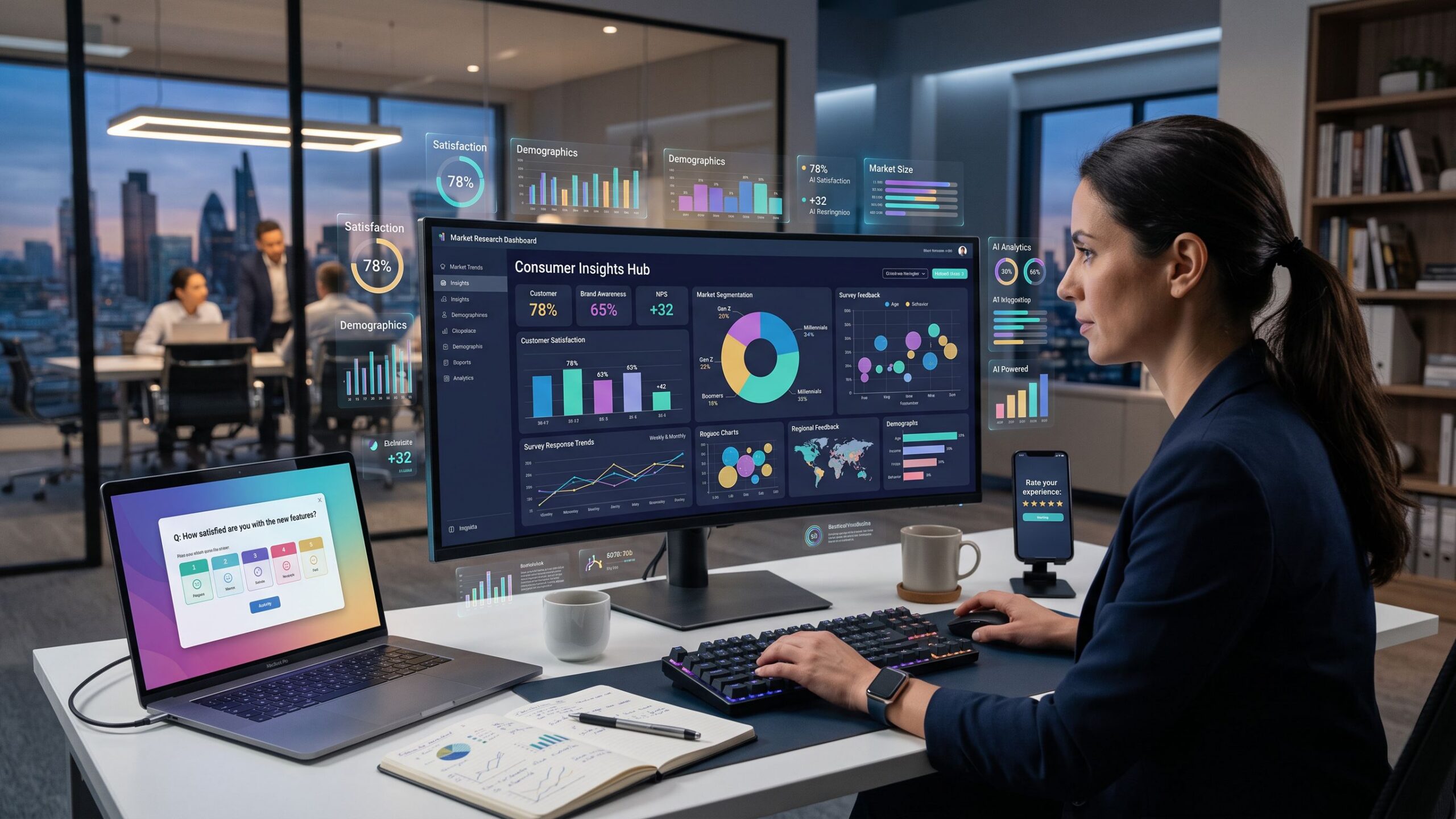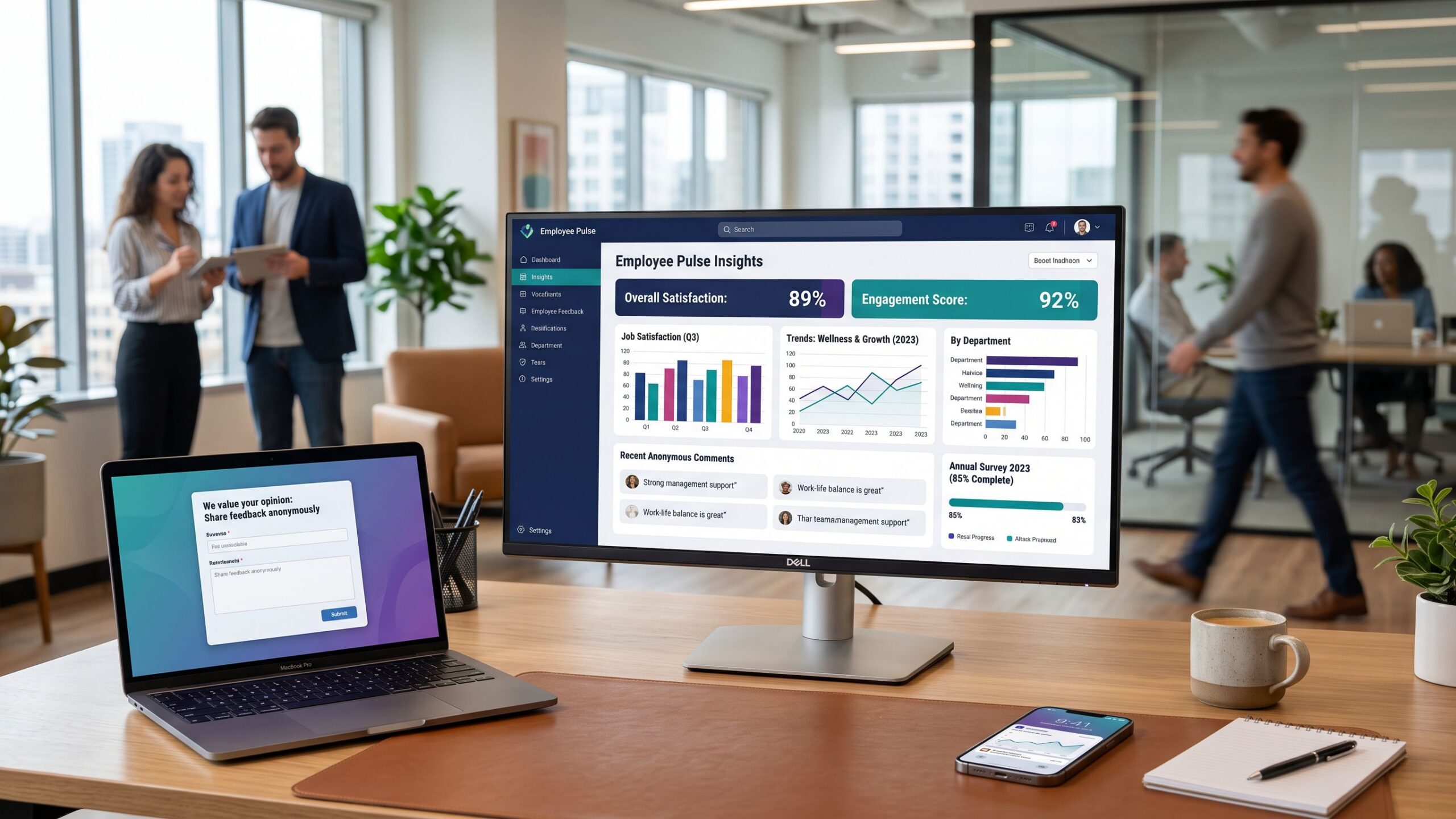
What if the most valuable insights about your business were hiding in the minds of your employees? Behind every meeting, project deadline, and performance review lies a collection of workplace experiences that managers may never fully understand. Some employees feel motivated, appreciated, and excited about their careers. Others quietly struggle with overwhelming workloads, limited advancement opportunities, ineffective communication, or a lack of recognition. Without a reliable way to collect honest feedback, these concerns can remain invisible until they develop into larger organizational problems. Employee satisfaction survey software helps bridge that communication gap by giving organizations a structured way to understand how their workforce truly feels.
Modern employee satisfaction surveys go far beyond asking whether someone enjoys their job. They explore management effectiveness, compensation, workplace culture, professional development, communication, flexibility, recognition, and overall employee well-being. Digital survey platforms make it possible to collect this information efficiently, analyze responses, identify recurring patterns, and monitor improvements over time. Many solutions now include customizable questionnaires, anonymous feedback options, automated survey distribution, interactive reporting dashboards, sentiment analysis, and integrations with popular workplace applications. However, choosing the right platform requires careful consideration. A small startup collecting monthly feedback has very different requirements from a multinational corporation analyzing employee engagement across thousands of workers. The following ten tools represent some of the most noteworthy options for creating employee satisfaction surveys, ranging from accessible form builders to sophisticated employee experience management platforms.
1. SurveyMonkey: A Powerful All-Around Employee Satisfaction Survey Builder
SurveyMonkey has established itself as one of the most recognizable survey creation platforms, and its flexibility makes it particularly appealing for organizations seeking professional employee feedback tools. The platform combines an approachable questionnaire builder with customizable templates, multiple question formats, conditional logic, and reporting capabilities. Human resources teams can create surveys addressing employee happiness, management effectiveness, benefits satisfaction, workplace communication, and organizational culture without needing advanced technical expertise.
One of SurveyMonkey’s greatest strengths is its versatility. Organizations can build quick pulse surveys, comprehensive annual satisfaction assessments, onboarding questionnaires, and exit surveys within the same platform. Rating scales, multiple-choice questions, matrix questions, and open-ended responses allow businesses to gather both quantitative and qualitative information. Its reporting tools help users identify patterns, compare responses, and examine employee sentiment across survey results. Advanced features, including certain logic options, collaboration capabilities, and data exports, depend on the subscription selected.
SurveyMonkey is especially useful for small and midsize businesses that want professional survey functionality without implementing a complete human resources management system. However, organizations requiring specialized employee engagement benchmarking, extensive employee lifecycle analytics, or sophisticated manager development workflows may prefer a dedicated employee experience platform. Subscription costs can also rise when businesses need more advanced features. Overall, SurveyMonkey delivers an appealing combination of accessibility, flexibility, and analytical capability, making it a strong general-purpose choice for employee satisfaction research.
2. Google Forms: Simple, Accessible, and Budget-Friendly Employee Feedback
Google Forms proves that effective employee satisfaction surveys do not necessarily require expensive software or complicated implementation. Its straightforward interface, familiar Google ecosystem, and accessible form-building tools make it particularly attractive for startups, small businesses, nonprofit organizations, and teams already using Google Workspace. Users can create questionnaires with multiple-choice questions, checkboxes, rating scales, dropdown menus, and written responses, making it easy to gather feedback about everyday workplace experiences.
One of Google Forms’ most valuable advantages is its simplicity. A manager can create a short employee satisfaction survey, distribute it through email, and begin collecting responses within minutes. Built-in response summaries provide a quick overview of results, while integration with Google Sheets allows users to organize data, create additional charts, and perform more detailed analysis. Basic branching and response validation features provide some customization without making survey development unnecessarily complicated.
However, Google Forms has limitations when compared with dedicated employee engagement software. It does not provide sophisticated workforce benchmarking, advanced sentiment intelligence, automated engagement action plans, or comprehensive employee lifecycle reporting. Businesses must also carefully configure email collection and sign-in requirements when anonymity is important. Although Google Forms can collect responses without recording respondent identities under appropriate settings, organizations should verify how their surveys are configured before promising confidential participation.
For businesses that need a reliable, affordable, and approachable way to begin collecting employee feedback, Google Forms is an excellent starting point. It offers essential survey creation capabilities without overwhelming users with unnecessary features.
3. Typeform: Making Employee Satisfaction Surveys More Engaging
Typeform approaches survey creation with a distinctive philosophy: questionnaires should feel more like conversations and less like administrative paperwork. Its visually polished interface, interactive presentation, and one-question-at-a-time design can make employee satisfaction surveys feel more welcoming and approachable. This presentation style is particularly attractive for organizations that want employees to participate thoughtfully rather than rush through lengthy forms.
Typeform allows businesses to customize survey branding, incorporate conditional logic, and create personalized question sequences based on previous responses. For example, an employee who reports dissatisfaction with professional development opportunities might receive additional questions about training resources, promotion transparency, or career advancement. Another employee who expresses satisfaction with those areas could move directly to questions about workplace communication or leadership effectiveness. This adaptability helps organizations gather more relevant information without presenting every employee with an identical questionnaire.
The platform also supports integrations with various business applications, allowing survey responses to flow into spreadsheets, automation systems, and collaborative workflows. Its modern appearance and user-friendly design are significant advantages for companies that prioritize employee experience. However, Typeform is not primarily a comprehensive employee engagement management platform. Organizations requiring advanced workforce benchmarking, specialized HR analytics, or extensive organizational reporting may need complementary software. Response allowances and advanced features also vary by subscription.
Typeform is particularly well suited to creative agencies, startups, technology companies, and businesses that value polished presentation and personalized interactions. Its strongest selling point is the ability to transform ordinary questionnaires into engaging digital experiences.
4. Qualtrics Employee Experience: Advanced Employee Feedback Analytics
Qualtrics Employee Experience is designed for organizations seeking a deeper understanding of workforce experiences through sophisticated feedback collection and analysis. Unlike general-purpose form builders, Qualtrics offers specialized employee experience capabilities that support engagement measurement, employee lifecycle surveys, organizational listening programs, and data-driven workplace improvement strategies.
One of its most impressive advantages is its analytical depth. Depending on the products and configuration, organizations can examine employee sentiment across departments, management structures, geographic locations, and important workplace milestones. Advanced reporting and text analysis capabilities can help identify recurring concerns that might otherwise remain hidden within large volumes of survey responses. For example, a multinational organization could discover that employees in one division report lower confidence in leadership than workers elsewhere, prompting targeted management training or communication improvements.
Qualtrics also supports organizations that want to move beyond simply measuring employee satisfaction. Its broader employee experience capabilities can help leadership teams connect feedback with structured action planning and organizational development initiatives. This makes it particularly valuable for enterprises managing complex workforces and multiple employee listening programs.
The primary disadvantages are complexity and investment requirements. Businesses may need dedicated administrators, thoughtful implementation planning, and substantial resources to take full advantage of the platform. Smaller organizations seeking occasional employee questionnaires may find its capabilities excessive. Nevertheless, Qualtrics remains a compelling choice for enterprises that require sophisticated analytics, scalable feedback collection, and a comprehensive approach to understanding employee experiences.
5. Culture Amp: Understanding Employee Engagement and Workplace Culture
Culture Amp specializes in helping organizations understand the relationship between employee experiences, workplace culture, and organizational performance. Rather than focusing exclusively on questionnaire creation, the platform provides employee listening capabilities designed to uncover the factors influencing engagement, motivation, belonging, and long-term retention.
Culture Amp offers engagement surveys, pulse surveys, research-informed questions, benchmarking capabilities, and reporting tools that help businesses interpret employee feedback. Organizations can investigate topics such as leadership confidence, psychological safety, recognition, professional development, organizational communication, and workplace inclusion. Its emphasis on understanding engagement drivers makes it especially useful for HR teams seeking to identify which workplace improvements deserve the greatest attention.
Benchmarking is another valuable feature. Comparing employee feedback against relevant external benchmarks can provide additional perspective when evaluating organizational strengths and weaknesses. A company might discover that its employees feel highly connected to their colleagues but express concerns about career advancement opportunities. These findings can help leadership develop more targeted strategies rather than implementing broad initiatives based on assumptions.
Culture Amp also offers additional capabilities related to performance management and employee development, depending on the products selected. However, organizations seeking only a simple survey builder may find the platform more comprehensive than necessary. Implementation requirements and subscription costs should be evaluated carefully.
For growing and established businesses that consider employee engagement an ongoing strategic priority, Culture Amp provides a compelling combination of feedback collection, workplace insights, and organizational development capabilities.
6. Workleap Officevibe: Continuous Feedback for Stronger Teams
Workleap Officevibe focuses on helping organizations maintain an ongoing conversation with employees rather than relying entirely on annual satisfaction surveys. Its approach emphasizes recurring pulse surveys, team-level feedback, and practical insights that managers can use to understand workplace experiences as they evolve.
One of Officevibe’s most appealing characteristics is its emphasis on consistency. Short, recurring questionnaires allow organizations to monitor employee sentiment without requiring lengthy assessments every few weeks. Managers can observe changes in morale, recognition, workload perceptions, and team relationships over time. This can be particularly valuable for remote and hybrid teams, where spontaneous workplace conversations may occur less frequently.
Imagine a department experiencing an unexpected increase in employee workload. Regular feedback might reveal declining satisfaction with work-life balance before the issue contributes to burnout or turnover. Managers can then investigate concerns, adjust expectations, or redistribute responsibilities. Officevibe’s focus on accessible reporting and ongoing conversations helps make employee feedback part of everyday management practices.
Its limitations become more noticeable when organizations require highly specialized survey research, extensive statistical customization, or complex enterprise-wide workforce analysis. The platform is more closely aligned with practical engagement monitoring and team development than advanced organizational research.
For small and midsize businesses seeking an approachable employee listening solution, Officevibe offers a useful balance of continuous feedback, managerial insights, and straightforward implementation.
7. 15Five: Connecting Employee Satisfaction With Performance and Development
15Five takes a broader approach to employee satisfaction by connecting workplace feedback with performance management, professional development, and manager effectiveness. The platform is particularly appealing to organizations that believe employee engagement improves when managers maintain meaningful communication and employees receive consistent opportunities for growth.
Its employee engagement capabilities help businesses understand workplace sentiment, while complementary performance management features support check-ins, goal discussions, and employee development conversations. This combination can help organizations move from identifying workplace problems to addressing the management practices that may contribute to them.
For example, an engagement survey might reveal that employees feel uncertain about professional advancement. Rather than treating the result as an isolated satisfaction score, an organization could examine how managers communicate expectations, discuss career development, and recognize employee achievements. By connecting feedback with ongoing management processes, businesses can create a more coordinated improvement strategy.
15Five is especially useful for companies investing in leadership development and structured employee performance programs. However, its broader functionality may be unnecessary for businesses that only need occasional anonymous surveys. Subscription costs and available capabilities also depend on the selected products.
For organizations seeking to integrate employee satisfaction measurement with performance improvement and managerial accountability, 15Five offers a distinctive approach that extends beyond traditional questionnaire software.
8. Lattice: Bringing Employee Feedback and People Management Together
Lattice combines employee engagement capabilities with a broader collection of people management tools. Its platform is designed to help organizations connect employee feedback, performance conversations, goals, and professional development within a more coordinated workplace management environment.
Employee engagement surveys allow businesses to investigate satisfaction levels, workplace relationships, leadership effectiveness, and organizational culture. These insights can complement other management processes, helping HR professionals and company leaders understand how employees experience their work.
One of Lattice’s strengths is its potential to connect feedback with broader organizational practices. Consider a company where employees consistently report uncertainty about career advancement. Survey results may reveal dissatisfaction, while performance management and development processes can help managers clarify expectations and discuss future opportunities.
The platform is particularly appealing to growing organizations seeking more structured people management systems. Rather than relying on separate applications for every employee-related process, businesses can evaluate whether Lattice’s connected capabilities meet their needs.
However, this comprehensive approach also creates potential drawbacks. Companies seeking only basic survey creation may find the software more extensive than necessary. Pricing, implementation requirements, and available product modules should be considered before adoption.
Lattice is best suited to organizations that want employee satisfaction surveys to contribute to a broader strategy involving employee growth, management effectiveness, and long-term workforce development.
9. Microsoft Forms: Convenient Employee Surveys for Microsoft 365 Users
Microsoft Forms offers a practical solution for organizations already operating within the Microsoft 365 ecosystem. Its familiar interface, straightforward questionnaire builder, and connections with Microsoft productivity applications make it particularly convenient for businesses that want to collect employee feedback without introducing an entirely separate technology platform.
Users can create surveys featuring multiple-choice questions, rating scales, written responses, and other common question formats. Built-in response summaries provide an immediate overview of collected information, while Excel integration allows organizations to organize responses and conduct additional analysis.
Microsoft Forms is particularly useful for department-level feedback, onboarding questionnaires, training evaluations, and short employee satisfaction assessments. A manager introducing a new flexible scheduling policy could distribute a survey through existing workplace communication channels and quickly evaluate employee reactions. Integration with the broader Microsoft environment can simplify distribution and reporting workflows.
However, Microsoft Forms does not provide the same specialized engagement benchmarking, workforce sentiment intelligence, or comprehensive employee experience management capabilities as dedicated HR platforms. Organizations must also review anonymity settings and account requirements carefully before collecting sensitive feedback.
For businesses that prioritize convenience, familiarity, and straightforward survey creation, Microsoft Forms represents an accessible option. It is especially attractive when an organization already has appropriate Microsoft 365 licensing and wants to maximize the value of its existing software investments.
10. Workday Peakon Employee Voice: Enterprise-Level Employee Listening
Workday Peakon Employee Voice is designed for organizations that need continuous employee feedback and sophisticated workforce insights across complex organizational structures. Its approach emphasizes ongoing listening, engagement measurement, and actionable information that helps managers and HR leaders understand employee experiences over time.
Rather than relying exclusively on annual employee satisfaction surveys, Workday Peakon supports recurring feedback programs that can reveal changes in workplace sentiment. This continuous measurement can be particularly useful during leadership transitions, organizational restructuring, policy changes, and periods of rapid business growth.
For example, a large organization introducing a new hybrid work policy could use recurring employee feedback to examine how the change affects communication, collaboration, flexibility, and overall satisfaction. Patterns across departments might reveal that certain teams need additional support or clearer expectations.
Workday Peakon is particularly relevant to enterprises seeking to connect employee listening with broader workforce management strategies. Its analytical capabilities and enterprise orientation can support organizations managing large numbers of employees across different locations.
However, smaller businesses may find the platform’s complexity and investment requirements difficult to justify. Implementation planning, administrative resources, and organizational readiness are important considerations.
For established enterprises that prioritize continuous employee listening and sophisticated engagement analytics, Workday Peakon offers a substantial alternative to traditional survey creation tools.
How to Choose the Best Employee Satisfaction Survey Software
Selecting the right employee satisfaction survey platform begins with identifying your organization’s specific goals. Some businesses simply want to understand whether employees are satisfied with their working conditions. Others need to investigate turnover risks, leadership effectiveness, professional development opportunities, or organizational culture across multiple departments. These objectives should guide the software selection process.
Ease of use is one of the most important considerations. Human resources professionals should be able to create and distribute surveys without extensive technical training, while employees should encounter questionnaires that are intuitive and accessible. Survey customization also matters because organizations need flexibility to ask relevant questions, apply branding, and adjust questionnaires for different employee groups.
Confidentiality deserves special attention. Employees may hesitate to discuss workplace concerns if they believe their responses could be traced back to them. Businesses should evaluate anonymous response settings, reporting thresholds, access controls, and data protection practices before choosing a platform. A survey should never promise complete anonymity unless its configuration and reporting processes genuinely support that claim.
Reporting capabilities are another major factor. Small teams may only need basic charts and response summaries, while larger organizations may benefit from historical comparisons, department-level analysis, benchmarking, and sentiment reporting. Integration with existing workplace software can also reduce administrative effort and simplify feedback management.
Finally, businesses should consider the total cost of ownership. Subscription fees, response limits, advanced features, implementation assistance, training, and additional product modules can all affect long-term value. The most expensive platform is not necessarily the most effective. The best choice is the solution that provides the functionality an organization will realistically use.
Employee Satisfaction Surveys vs. Employee Engagement Surveys
Employee satisfaction and employee engagement are closely related, but they measure different aspects of workplace experience. Understanding this distinction can help organizations select appropriate software and design more meaningful questionnaires.
Employee satisfaction generally measures how content employees feel with their working conditions. Questions may focus on compensation, benefits, scheduling flexibility, workplace relationships, management support, and access to necessary resources. These surveys help organizations identify whether fundamental employee expectations are being met.
Employee engagement explores a deeper connection between employees and their work. It examines motivation, commitment, enthusiasm, organizational purpose, and willingness to contribute toward shared goals. An employee might be satisfied with their salary and schedule while feeling disconnected from company objectives or uncertain about their professional future.
General-purpose survey builders such as Google Forms, Microsoft Forms, and SurveyMonkey can support both types of questionnaires. Dedicated platforms such as Culture Amp, Qualtrics, and Workday Peakon offer more specialized capabilities for organizations seeking comprehensive employee engagement analysis.
The most effective employee listening strategies often examine satisfaction and engagement together. Understanding whether employees feel comfortable in their jobs is important, but discovering whether they feel motivated, valued, and connected provides a more complete picture of organizational health.
Best Practices for Creating Employee Satisfaction Surveys That Deliver Meaningful Results
Even sophisticated survey software cannot compensate for poorly designed questions. Effective employee satisfaction surveys begin with clear objectives, thoughtful questionnaire design, and a genuine willingness to act on the results. Organizations should identify what they want to learn before selecting question formats or distributing surveys.
Keeping questionnaires focused can improve the employee experience. Short pulse surveys are useful for tracking recurring workplace concerns, while more comprehensive assessments may be appropriate for annual or semiannual evaluations. Questions should use clear, neutral language that does not pressure employees toward positive responses. Instead of asking whether employees appreciate outstanding leadership, organizations should ask employees to evaluate how effectively leadership communicates, provides support, or responds to concerns.
Consistency is equally important. Repeating selected questions across survey cycles makes it easier to identify improvements or declining satisfaction. Open-ended questions should also be included when appropriate because numerical ratings cannot always explain the experiences behind employee opinions.
Organizations should communicate how feedback will be used and who can access survey results. Employees are more likely to participate thoughtfully when they understand the purpose of the survey and trust the process. Leadership should also share meaningful findings and explain which improvements are being considered.
Perhaps the greatest mistake organizations make is collecting feedback without taking action. Repeated surveys that produce no visible changes can undermine employee trust. Successful employee listening programs connect survey findings with realistic improvement plans, clear responsibilities, and ongoing communication.
Which Employee Satisfaction Survey Tool Offers the Best Value?
The best value depends on organizational size, available resources, and the depth of analysis required. Google Forms and Microsoft Forms are excellent options for businesses seeking straightforward survey creation with minimal additional expense. They provide essential questionnaire capabilities without requiring a dedicated employee experience platform.
SurveyMonkey offers a strong middle ground for organizations needing greater customization and reporting flexibility. Typeform is especially appealing when presentation quality and an engaging respondent experience are important priorities.
For businesses seeking continuous employee listening and more structured engagement programs, Officevibe and Culture Amp deserve consideration. Organizations interested in connecting employee feedback with performance management and professional development may find 15Five or Lattice more suitable.
Qualtrics and Workday Peakon are particularly compelling for enterprises requiring sophisticated workforce analytics, extensive feedback programs, and scalable employee experience management capabilities.
Because subscription structures, feature availability, and pricing can change, organizations should review current vendor information, request demonstrations, and compare total costs before purchasing. Testing software with a small employee group can also reveal whether the platform meets practical expectations.
Final Verdict: Finding the Right Software to Build a Happier Workplace
Employee satisfaction survey software has evolved from a convenient questionnaire tool into an important resource for understanding organizational culture, workplace challenges, and employee expectations. Whether a company employs ten people or ten thousand, thoughtful feedback collection can reveal opportunities for improvement that might otherwise remain unnoticed.
SurveyMonkey stands out as a versatile general-purpose option, while Google Forms and Microsoft Forms provide accessible solutions for businesses seeking simplicity and affordability. Typeform brings a distinctive, interactive experience to questionnaire design. Culture Amp and Officevibe offer specialized approaches to ongoing employee engagement, while 15Five and Lattice connect workplace feedback with broader people management strategies. Qualtrics and Workday Peakon provide extensive capabilities for enterprises managing complex employee listening programs.
Ultimately, the best employee satisfaction survey platform is not necessarily the one with the largest collection of features or the most elaborate analytics dashboard. It is the software that helps an organization ask meaningful questions, collect trustworthy responses, understand employee experiences, and take appropriate action.
A well-designed survey can uncover an overlooked workplace challenge, reveal opportunities for professional growth, identify communication problems, or inspire improvements that strengthen employee relationships. When organizations combine reliable technology with thoughtful leadership, employee feedback becomes more than another collection of statistics. It becomes a foundation for stronger workplace culture, improved employee experiences, and more informed organizational decisions.
For businesses ready to listen more closely to their workforce, the right employee satisfaction survey software provides an opportunity to turn everyday employee opinions into meaningful and lasting improvements.
Form and Survey Creation Software Reviews
Explore Nova Street’s Top 10 Best Form and Survey Creation Software Tools! Dive into our comprehensive analysis of the most powerful platforms designed to transform how you create, distribute, and analyze forms and surveys across every device. Our detailed side-by-side comparison chart helps you pinpoint the perfect solution for online surveys, feedback collection, registrations, quizzes, and data reporting—all in real time. We break down every critical element—question types, logic and branching, design customization, response limits, analytics and reporting, integrations, automation workflows, security and compliance, pricing, and cross-platform compatibility—so your data collection process stays smart, efficient, and seamlessly connected across Windows, macOS, iOS, Android, and the web.